
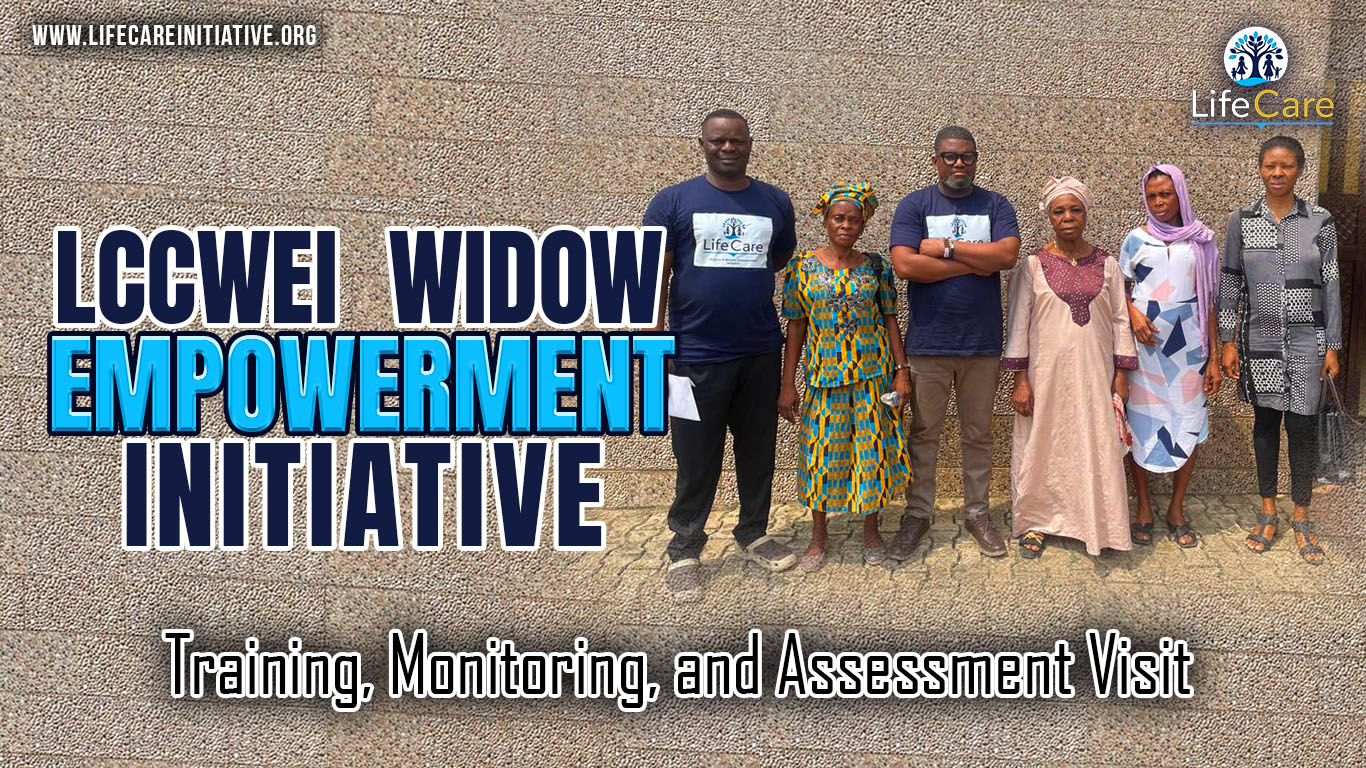
On March 3, 2026, the LifeCare team conducted the third training, monitoring, and assessment visit for three widows participating in the pilot Widow Empowerment Initiative (WEI).
During the visit, the women received practical training in bookkeeping, financial record keeping, and simple profit monitoring techniques designed to help them better manage and grow their small businesses.
The session was facilitated by financial expert and stockbroker Miss Titilayo Awelewa, who guided the participants through the importance of documenting income, expenses, and business performance. To ensure clear understanding and full participation, the training was conducted in Yoruba, enabling the women to engage comfortably and ask practical questions related to their businesses.
The session revealed that while the widows were able to verbally explain the performance of their businesses, they previously lacked structured financial record-keeping systems. The training therefore focused on introducing simple, practical bookkeeping methods that will allow them to track sales, monitor profits, and make informed financial decisions.
The interactive training session lasted for over an hour and encouraged active participation and discussion.
Progress and Assessment
Encouraging progress was observed among all three participants.
Mrs. Margret Coker, who operates a pap-making business, now records an average daily profit of approximately ₦1,500 after sales.
Mrs. Gift Eke, who produces detergent and soap, showed the most significant improvement. She reported a total profit of approximately ₦275,000 after supplies, compared to a previous loss of ₦22,000 recorded during the last assessment. This improvement is largely attributed to her decision to rent a shop space, which has increased the visibility and accessibility of her products within the community.
Mrs. Oluwakemi Alice Olayiwola, who sells beads and clothing, has also demonstrated steady progress. Through the income generated from her business, she has been able to transfer one of her children from a public school to a private school in Ayobo. She also participates in a thrift savings group, contributing ₦5,000 monthly and receiving ₦30,000 after six months, which provides additional financial support for her household.
Key Outcome and Next Steps
One of the major outcomes of this monitoring visit was the introduction of simple bookkeeping and business development strategies that will help the widows effectively track their financial activities and strengthen the sustainability of their businesses.
The LifeCare team will conduct another monitoring visit in approximately 90 days to assess how effectively the widows are applying the new record-keeping methods and to continue providing mentorship and support for their business growth.
At LifeCare Children & Women Empowerment Initiative (LCCWEI), we believe that when widows are equipped with practical skills and sustainable support, they gain the strength to rebuild their lives and secure a better future for their children. We remain committed to empowering vulnerable children, widows, and families through education support, economic empowerment, community intervention, and sustainable development programs.